The Silent Assassin of Airtime: Unmasking the Subtle Flaws That Bury Your Radio Spot
From gain structure ghosting to frequency spectrum clashes, learn the critical art of voice-music fusion that separates breakthrough ads from mere broadcast noise. It's time to leverage smart tools to reclaim the magic of the commercial break.
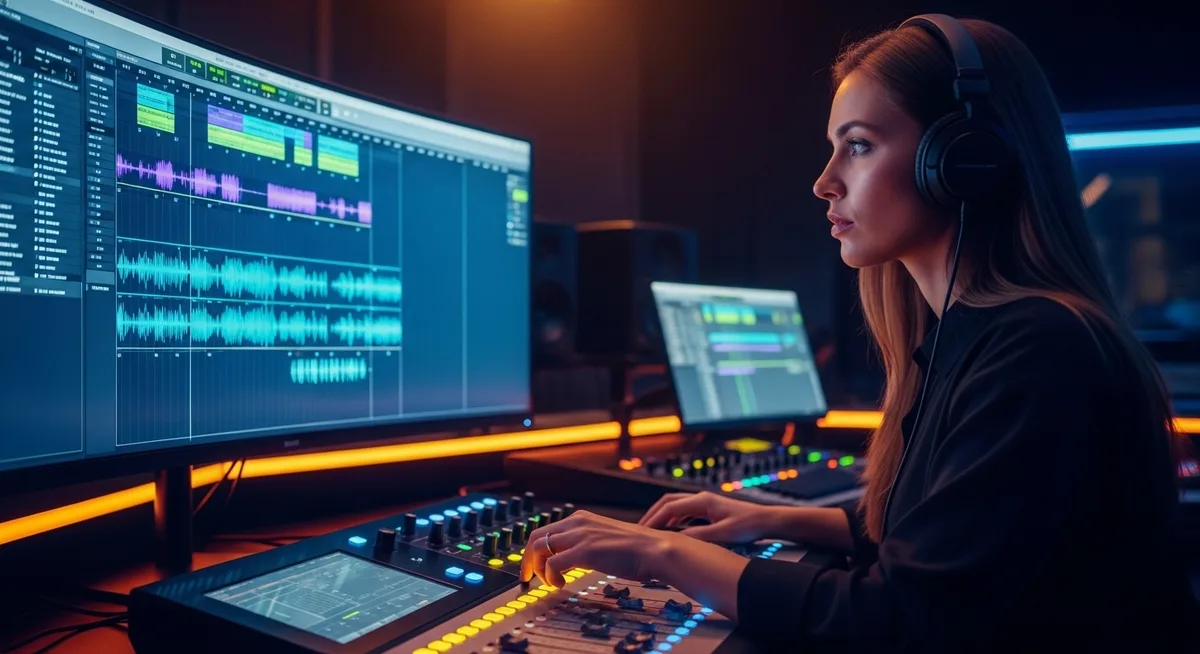
Alright, let's cut through the static, because as a grizzled veteran who’s spent more nights than I can count strapped to a console, carving sound out of thin air, I know one truth: the commercial break isn’t just noise. It’s a battlefield. And too often, good messages get obliterated by bad engineering. We’re talking about the surgical art of the 'mezcla clavada' – the perfectly nailed mix where every element, from the 'pisador' (underscore bed) to the voiceover, lives in harmonious, punchy alliance. But how many times have you heard a 'tanda comercial' where the voice gets swallowed whole, or worse, fights a losing battle against the 'cortina' (jingle)? That's the invisible millisecond where your brand message dies.
The Failsafe Fusion: Voice and Music as One
The secret, the true alchemy, lies in the seamless fusion of stock music with the human voice. It's not just about lowering the music volume when the VO kicks in. That’s amateur hour. We're talking about frequency sculpting, precision compression ratios, and dynamic sidechain wizardry that allows the voice's core intelligibility frequencies to cut through like a laser, without ever sounding harsh or unnatural. It's about ensuring those critical vocal harmonics don't get masked by a busy instrumental track. Remember, the goal is 'fidelidad de máster' – master fidelity – even in a crowded 30-second spot. This isn't just technicality; it's the emotional connection, the 'FX de impacto' (impact effects), and that lingering 'cola de delay' (delay tail) that truly imprints on the listener. The creative director crafts the vision, but it's the audio engineer who builds the sonic stage.
For decades, achieving this level of sonic excellence on a shoestring budget for local ad agencies was a grind. Countless hours spent manually adjusting every 'bache' (dead air gap), taming 'picos de ganancia' (gain peaks), and endlessly tweaking EQs. It was a painstaking process that often forced compromise, sacrificing that 'mística artística local' for sheer speed. But that era is over. This is where smart tools become indispensable. Imagine an assistant that understands the psychoacoustics of a perfectly balanced mix, that instinctively knows how to blend that energetic stock music track with a compelling voiceover, ensuring clarity and impact across every playback device.
The SONODIT Revolution: Artistic Mystique Meets AI Precision
This is precisely where SONODIT’s advanced audio rendering engine steps in. It's not just automation; it's intelligent sonic engineering in the cloud. We're talking about a system that automates the complex dance of compression, EQ, and dynamic processing, delivering a 'mezcla clavada' that rivals hours of human labor, in mere seconds. This isn't about replacing the creative director's vision or the engineer's ear; it's about empowering them. Local ad agencies can now achieve 'big brand' sound quality with unprecedented speed and cost efficiency, allowing creative teams to focus on the message, knowing the sonic packaging will be pristine. It's about optimizing workflow without losing the soul, ensuring that every message isn't just heard, but deeply felt, cutting through the clutter of the commercial break like a finely tuned instrument.
The future of radio advertising isn't just about what you say, but how impeccably it's delivered. Smart audio rendering engines are the game-changer, fusing artistic mystique with technical precision to ensure every commercial break becomes a powerful, undeniable connection with the listener.
Smart Radio Studio
Test the smart AI radio producer assistant today!