The Invisible Hertz: Why Cloud-Processed AI Voices Are Mastering the Ad Pod (And How Your Untreated Mic Falls Short)
Forget the 'good enough' home studio. We're dissecting the acoustic chasm between pristine, cloud-rendered AI vocal timbre and the inherent chaos of common microphone recordings. This is a deep dive into sound engineering's commercial impact, revealing how balanced algorithms now perfectly emulate the veteran radio operator's golden ear.
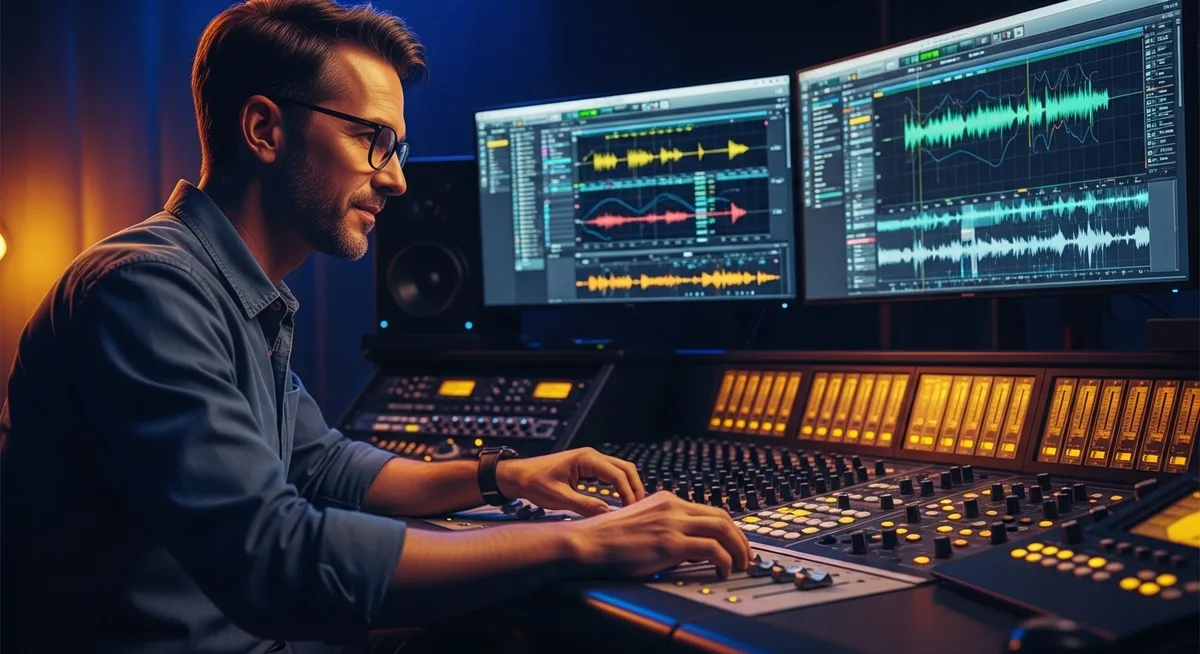
Alright, fellow sound obsessives, let's get real. I've spent more nights than I can count glued to the monitors, chasing that elusive perfect mix – the voice that cuts through the static, the music bed that cradles it just right, the impact FX that punch you in the gut without rattling the whole damn chain. And I’m telling you, in the relentless sprint of the commercial block, every single millisecond, every Hertz, every whisper of background noise either sells the message or sends it straight to dead air.
The Unseen Battle: Pristine Cloud vs. Home Studio Haze
For too long, local ad agencies have been caught in a production purgatory. They need speed, they need cost-effectiveness, and often, that leads to a voice-over recorded at home – maybe on a decent USB mic, maybe even an entry-level condenser. But here's the dirty truth: that 'decent' mic, without a properly treated room, without a meticulous signal chain and a seasoned operator riding the faders, is a liability. It's bringing along a whole entourage of room reflections, HVAC hum, and street noise. It's a fight against the environment, and the listener subconsciously picks up on that lack of broadcast-grade fidelity. It's not about the words anymore; it's about the struggle to hear them. Enter the new breed: ultra-realistic AI voices. When these voices are rendered and processed in the cloud, they arrive as pure, unadulterated timbre. No room reflections. No stray hums. Just the raw, perfect vocal, ready for a pro-level, surgical application of EQ, compression, and gating. This isn't just a voice; it's a meticulously crafted sound asset.
Emulating the Golden Ear: Algorithms as Master Operators
So, what's the secret sauce? It’s not just about the source; it's about the intelligent processing. A veteran radio operator, the one who’s mixed a thousand ad pods, instinctively knows how to make a voice sit perfectly in the mix – how to duck the music bed without making it disappear, how to sweeten the highs without sibilance, how to tame the lows without losing authority. This is a delicate dance of compression, EQ, de-essing, and careful gain staging to ensure the voice is consistently present, compliant with loudness regulations (hello, LKFS!), and emotionally impactful. Modern cloud-based audio rendering engines, like SONODIT’s intelligent assistant, are now built with algorithms that effectively emulate this very 'golden ear.' They're not just applying presets; they're analyzing the audio, identifying artifacts, and applying balanced, dynamic processing to achieve a master-grade fidelity. They ensure that vocal sits front-and-centre, that music beds are smoothly ducked, and that those critical impact stings hit precisely when they should, all while maintaining perfect loudness compliance. For local ad agencies, this means drastically optimized production times and significant cost savings, delivering impeccable, broadcast-ready audio in seconds, not hours.
The future of compelling commercial audio isn't about raw talent battling bad acoustics; it's about leveraging pristine, AI-generated timbre and intelligent, cloud-based processing to achieve the sonic perfection that only a seasoned operator once could. This isn't replacing the human touch; it's elevating it, making broadcast-grade fidelity accessible and instantaneous.
Intelligent Radio Studio
Try the smart Canadian AI radio producer assistant!